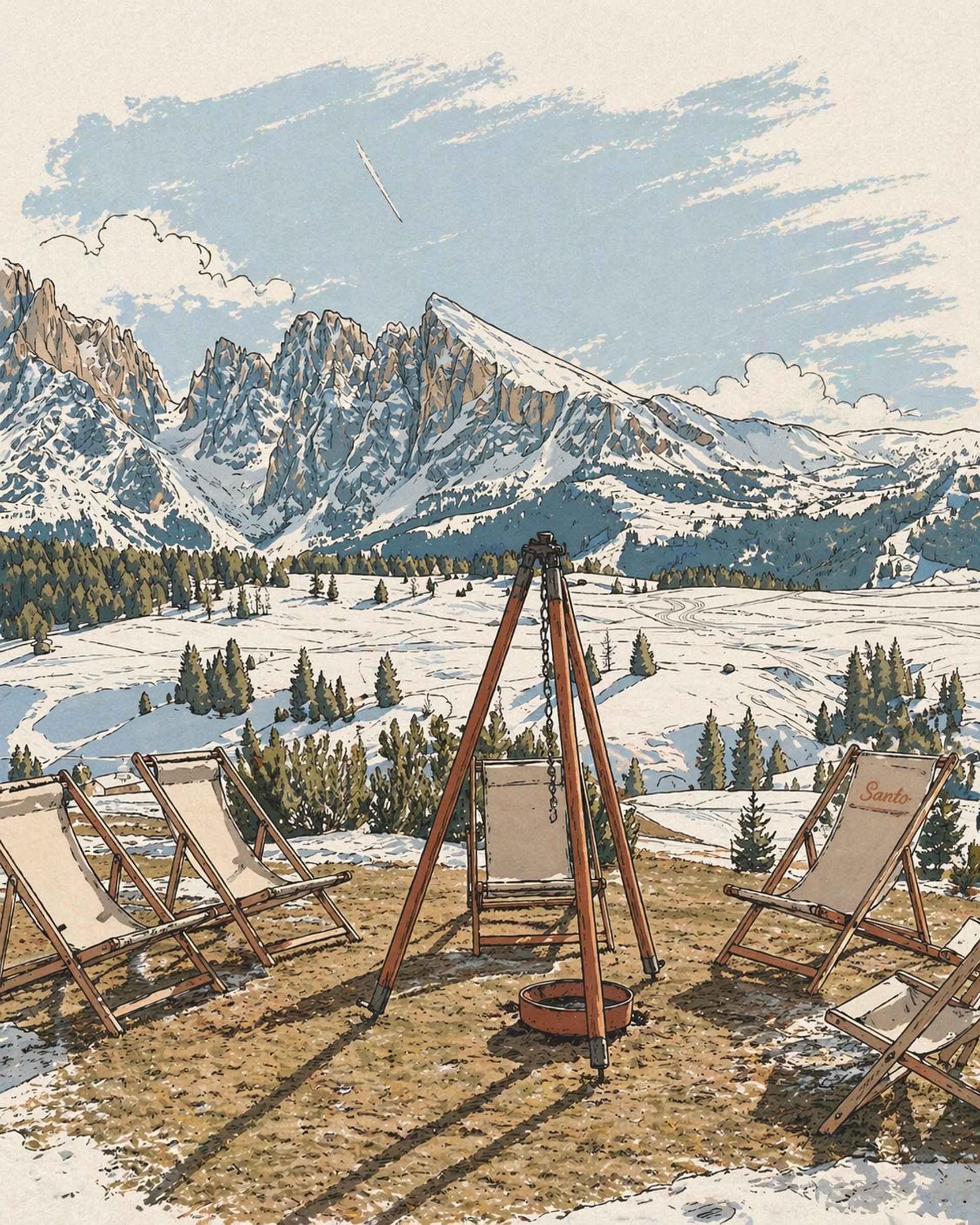
Italy - The Dolomites
High in northern Italy, where limestone peaks rise sharply above alpine valleys, the Dolomites feel less like a destination and more like a landscape designed by nature for contemplation. Villages sit quietly beneath monumental mountains, and the rhythm of life follows the light — mornings that reveal pale stone cliffs and evenings when the peaks glow rose-gold in the final hours of the day.
Unlike the more theatrical destinations of Italy, the Dolomites reward those who appreciate stillness: long walks through forests, slow lunches in mountain lodges, and evenings spent watching the mountains change color as the sun disappears behind the ridges.
Where the mountains were carved by gods and time forgot to hurry
The Dolomites are not a backdrop.
They are the entire story.
The Dolomites occupy a unique position within Italy. Geographically they are part of the Alps, yet culturally the region blends Italian elegance with Central European alpine traditions. Villages such as Cortina d’Ampezzo, Ortisei, and San Cassiano reflect this intersection — where Italian hospitality meets the architectural simplicity of alpine life.
What defines the Dolomites is not only the mountains themselves but the relationship between landscape and human settlement. Meadows open beneath towering rock formations, wooden chalets sit beside centuries-old churches, and narrow roads wind quietly through valleys that feel remarkably untouched despite their beauty.
For travelers seeking spectacle, the Dolomites offer it in abundance. Yet the deeper appeal lies in their calm — a place where movement slows and the landscape becomes the central experience.
Where To Stay
The Dolomites are home to some of the most remarkable mountain hotels in Europe — places where contemporary design, alpine craftsmanship, and dramatic scenery come together seamlessly.
A small number of properties stand out for their ability to frame the landscape rather than compete with it.
In San Cassiano, intimate alpine lodges sit surrounded by quiet valleys and forests, offering direct access to mountain trails and panoramic views of the surrounding peaks.
In Alpe di Siusi, hotels are positioned on one of Europe’s largest alpine plateaus, where wide open meadows stretch toward distant mountain walls.
Elsewhere in the region, certain design-forward mountain retreats have reinterpreted the traditional chalet aesthetic — combining wood, stone, and glass to create spaces that feel both contemporary and deeply connected to the landscape.
The best hotels in the Dolomites are not simply places to sleep. They are vantage points from which to experience the mountains.
Where To Wander
The Dolomites are best understood through movement.
Certain landscapes reveal themselves slowly — alpine meadows that open unexpectedly beyond forest paths, narrow passes where entire valleys appear suddenly beyond a turn in the road.
One of the most memorable areas lies around Tre Cime di Lavaredo, where three monumental peaks rise dramatically above the surrounding terrain.
Elsewhere, the vast plateau of Alpe di Siusi offers sweeping views across rolling alpine grasslands framed by jagged mountain ridges.
Villages such as Ortisei and San Cassiano provide quieter moments — small streets, traditional bakeries, and local craftsmanship that reflect the long cultural history of the region.
In the Dolomites, even the act of wandering becomes part of the journe


Experiences To Return For
Certain moments define a stay in the Dolomites.
Early mornings reveal the mountains at their most serene, when the valleys are still and the first sunlight reaches the limestone peaks.
Afternoons are often spent on long alpine walks, where trails move gently through meadows before climbing toward dramatic ridgelines.
Lunch is rarely rushed — mountain refuges serve simple but memorable alpine dishes, often accompanied by expansive views across the valleys below.
And in the evening, a phenomenon known as enrosadira transforms the mountains. As the sun sets, the pale stone of the Dolomites reflects shades of pink and orange, creating a glow that seems almost unreal against the darkening sky.


A Suggested Rhythm
A few days in the Dolomites should unfold gradually.
Days often begin early, when the mountains are at their quietest. Gentle walks through alpine meadows lead to viewpoints where entire valleys reveal themselves below.
Midday invites a pause — perhaps a long lunch in a mountain lodge or a slow drive through one of the region’s dramatic passes.
Afternoons might be spent exploring small villages or continuing deeper into the mountains, while evenings return to the calm of a mountain hotel where the landscape remains constantly present.
The Dolomites are not a place for hurried travel. They are best experienced at a pace that mirrors the mountains themselves.
A Final Note
Italy offers countless destinations, yet few possess the quiet majesty of the Dolomites. Here the landscape speaks for itself, and the experience lies not in checking landmarks from a list but in allowing the mountains to shape the rhythm of the journey.
For travelers drawn to nature, design, and places that feel both dramatic and serene, the Dolomites remain one of Europe’s most remarkable landscapes.
If you are considering a journey to this region, I would be happy to help shape an experience that reveals its most memorable perspectives.